Under the Infinity Plan worth Rs 549, users get unlimited free local and STD voice calls to any network in India. Users will also get a 3G data benefit of 1GB for non-4G handsets and 2GB if they are using a 4G-support phone. In addition to these, Airtel is also giving its users a premium access to its Wynk Music and Wynk Movie service.
The other plan costs Rs 799 and gives users access to unlimited free local and STD voice calls to any network in India. Along with this, users also get 3G data benefit of 2GB for non-4G phone and 4G data benefits of 4GB for 4G handsets. Just like the RS 549 plan, this plan also includes a premium access to Airtels's Wynk Music and Wynk Movie service.
The hyped augmented reality game Pokemon Go is all set for another spike in Interest, because the game is officially launching in India. Reliance Jio has delighted Indian gamers by getting the game to release here. A partnership has been formed between Jio and Niantic, where Reliance Digital Stores and select partner premises will appear as Pokéstops or gyms in the game. Pokémon GO will officially launch in India on December 14.
John Hanke, Chief Executive Officer and founder of Niantic said “We are delighted to partner with Jio to launch Pokémon GO in India. It’s exciting to see Pokémon fans in India step out and explore their neighbourhoods in search of Pokémon and Jio’s disruptive high speed 4G LTE Network will be an excellent way to experience the game.”
Mathew Oommen, President Reliance Jio said “With over 500 million downloads globally, we are excited to launch Pokémon GO officially in India on the Reliance Jio network. Our partnership with Niantic not only brings access to the Pokémon GO app but also opens the door to more opportunities for our customers to enjoy content on Jio’s one-of-a-kind mobile broadband network”
Pokémon GO will be able to catch, train and battle with Pokémon in any of the Jio outlets across the country. The JioChat app will have a Pokémon GO channel dedicated to the social aspects of the game. Users will be able to co-ordinate efforts for organising Pokéwalks, identifying nests or for Magicarp farming excursions. The channel will feature daily tips, contests, clues and special events.
Disclaimer: Reliance Jio is owned by Reliance Industries, who also own Network18, the publisher of Firstpost and tech2.
According to the government scheme, users will get 100 minutes of talk time and Internet data free till 3GB along with a SIM card. This offer is only for people aged between 16 to 30 years of age each month.(Reuters)
Following the success of Reliance Jio, the Goa government in its attempt to promote central government’s Digital India initiative is planning to provide free internet and calling facilities to the youth in the state. Reliance Jio’s 4G services, with its free 4G services, has already lured a large portion of the Indian population, especially the youth. And now, it has also extended its free calling, internet and messaging till March 2017. At the same time, other rival network providers, in order not to lose out on the race had decided to provide similar offers to its customers. Meanwhile, amidst all these wars between telecom operators, the Indian government is also trying to push the envelope of its flagship Digital India campaign.
Now, in order to use the digitisation campaigns more, Goa government has decided to back a Vodafone offer which is similar to the free SIM, the internet and calling feature by Reliance Jio. This move is going to pose a threat to Reliance, at least in that region as of now. The limited free talk time and internet offer is directed towards more than a lakh young people in the region. The tie-up with Vodafone is likely to affect 1.25 lakh of Goa youth.
According to the scheme, users will get 100 minutes of talk time and Internet data free till 3GB along with a SIM card. This offer is only for people aged between 16 to 30 years of age each month. Goa Chief Minister Laxmikant Parsekar had reportedly informed about the Goa Yuva Sanchar Yojana. He also said that the state has a provision where if the scheme is found being misused, it can be discontinued.
Chief minister of Tamilnadu, leader to many Tamils and 'Amma' to millions, J jayalalitha on Monday after undergoing treatment at Appolo hospital in Chennai for 75 days. She was 68.
Jayalalithaa, who was admitted to hospital on September 22 with complaints of fever and dehydration, suffered a cardiac arrest on Sunday evening. On Monday, Jayalalithaa continued to be very critical and was on extracorporeal membrane oxygenation (ECMO) and life support systems. And the end came at 11.30pm.
In a statement issued after midnight on Tuesday, Apollo Hospitals said: "It is with indescribable grief we announce the sad demise of our esteemed honorable chief minister of Tamil Nadu Puratchi Thalavi at 11.30pm today (5.12.2016). Our honourable chief minister Selvi jayalalitha admitted on 22.9.2016 with complaints of fever and dehydration and underlying comorbidities. The honourable chief minister subsequently recovered substantially to be able to take food orally.
"On this basis honorable chief minister was shifted from the advanced critical care unit to the high dependency unit where her health and vitals continued to improve under the close monitoring by our expert panel of specialists."
It said, "Unfortunately the honourable chief minister suffered a massive cardiac arrest on December, 4 2016, even while our intensivist was in her room. The honourable chief minister was immediately administered resuscitation (CPR) and provided the ECMO support within the hour. ECMO is the most advanced treatment currently available internationally. Every possible clinical attempt was made to sustain her revival. However, despite our best efforts, our honourable chief minister's underlying conditions rendered her unable to recover and she passed away at 11.30pm today (5.12.2016)."
"Every member of the Apollo Hospitals family, the clinicians, the nursing and paramedical staff have strived hard to provide the highest standards of care to our beloved chief minister. We have worked tirelessly combining the might of the clinical and technological resources at our command with the spirit of healing and compassion that inspires us. We join the nation and the people of Tamil Nadu in deeply mourning her loss," it said.
Born on February 24, 1948, Jayalalithaa entered films when she was 16 years old. Making her debut as lead actress in a Kannada film, she was launched into Tamil films starring as the heroine in MGR's "Ayirathil Oruvan." Jayalalithaa and MGR acted together in 28 films, many of them super hits. She acted in more than 140 films in Tamil, Telugu, Kannada, Malayalam, Hindi and English.
Her formal entry into politics happened in 1982 when she was inducted into AIADMK by her mentor and former co-star MGR. She was given key responsibilities, including in the implementation of the landmark noon-meals scheme that taught her lessons in welfare politics. When MGR fell ill, she campaigned extensively for the party that won the 1984 election.
After his death in 1987, she took charge of the party and became chief minister in 1991. Since then she had been chief minister for three terms, coming back to power for the fourth term in 2016.
Her political life was marred by corruption allegations. She was convicted in four corruption cases and had to step down from chief minister twice but higher courts acquitted her and she was able to come back to power
Infocomm’s move to cap free data usage at 1GB a day instead of the earlier 4GB limit will reduce network load and pave the way for a better 4G experience, boosting the Mukesh Ambani-led telco’s chances of holding onto customers after its free offer closes March 31 next year, analysts and industry experts said.
JP Morgan expects Jio to net 100 million users by March end. Morgan Stanley expects Jio to end the January-March period with 90 million customers, but expects the company to have 45 million paying customers going into FY18 when it starts charging from April 2017, assuming a 50% conversion ratio. Jio currently has over 52 milion subscribers.
Reliance Jio’s strategy of more stringent daily data caps should reduce network utilisation and allow users to experience a “higher quality service” and potentially “increase the share of users who continue with the company, post-expiry of the free offer,” Credit Suisse said in a note. The move to cap daily data, analysts said, would also address recent criticism about Jio’s slowing network speeds and deteriorating customer experience amid disproportionate free data consumption by some.
On Thursday, Mukesh Ambani said that all existing users and those who subscribe to Jio’s services from December 4 will get free voice, data, Jio apps and content for free till March 31. Daily data under the new plan though is capped at 1GB versus the 4GB allowed currently. Voice will be free for life.
Reliance Jio Happy New Year Offer makes all services free till March 31 Reliance Jio has announced the Happy New Year Offer that extends free voice, data, and other services as part of its introductory Welcome Offer by three more months. The Reliance Jio Happy New Year offer will start on January 1 2017, while the Welcome Offer ends on December 31 2017. Those who buy Jio SIM cards after December 4 will be part of the Happy New Year Offer, while existing users who signed up for Reliance JioWelcome Offer will automatically be moved to the new offer.
WhatsApp video calling is finally here with the update now available on Android, iOSand Windows 10 devices. WhatsApp says video calling will use learning from voice calls to make it fast and reliable. Also video calls are end-to-end encrypted just like chats and other media on the platform. For you to get started with video calling, it is important that your friends are on the same version of the app. Here are the top five things that you must know about WhatsApp’s video calling feature
Android Nougat introduces a split-screendisplay mode for phones, in which two apps can be snapped to occupy halves of the screen. An experimental multi-window mode is also available as a hidden feature, where multiple apps can appear simultaneously on the screen in overlapping windows.[17]
The notification shade was redesigned, featuring a smaller row of icons for settings, replacing notification cards with a new "sheet" design, and allowing inline replies to notifications (this feature is implemented via existing APIs that are used for similar functionality on Android Wear). Multiple notifications from a single app can also be "bundled",[4] and there is greater per-app control over notifications.[18]
The "Doze" power saving mechanism introduced in Android Marshmallow was expanded to include a state activated when the device is running on battery and the screen has been off for a period of time but is not stationary. In this state, network activity is restricted, and apps are granted "maintenance windows" in which they can access the network and perform background tasks. As in Marshmallow, the full Doze state is activated if the device is stationary with its screen off for a period of time.[4][19] A new "Data Saver" mode restricts background mobile data usage, and can trigger internal functions in apps that are designed to reduce bandwidth usage, such as capping the quality of streaming media.[19][20]
This story was delivered to BI Intelligence "Digital Media Briefing" subscribers. To learn more and subscribe, please click here.
VLC media player has launched a technical preview for playing 360-degree videos in its desktop app, with the full functionality set to arrive when VLC 3.0 launches at the end of the month, Variety reports.
VLC is one of the most popular cross-platform multimedia players, and its support for 360 video formats is another sign that virtual reality content is crossing into the mainstream.
VLC is revered for its ability to play virtually any video format. For example, its app release for Apple TV gave users oodles of flexibility to watch videos in formats that Apple doesn’t support. There have been over 2 billion downloads of the VLC media player to date, and over 1.3 billion downloads of its the most recent VLC 2.0 “Twoflower” version, which was first released in 2012.
Next year, VLC plans to support major VR headsets and platforms. Google Daydream, HTC Vive, Oculus Rift will probably be integrated with VLC, according to the media player’s parent organization VideoLAN. Future releases of VLC with 360-degree video support will also be available on Android, iOS and Xbox One.
However, YouTube’s 360-degree videos yet aren’t supported by VLC just yet. VideoLAN President Jean-Baptiste Kempf told PC World that they are waiting on Google to release this support. Once YouTube exports video with the 360 metadata standard, VLC will automatically be able to play them. This issue points to the the fragmentation problem that exists in the VR industry.
The virtual reality (VR) market has made significant strides throughout 2016.
New VR headsets like the Oculus Rift and the HTC Vive debuted amid great consumer anticipation, while VR content launches kept pace, with Batman: Arkham VR and Chair In A Room garnering encouraging download totals.
At the same time, industry groups and conferences brought developers, investors, and content producers together, helping to further ramp up buzz in this nascent space.
BI Intelligence, Business Insider's premium research service, forecasts shipments of VR headsets to spike by 1047% year-over-year (YoY) to 8.2 million in 2016. This growth will help propel the virtual reality space to exceed $1 billion in revenue for the first time, according to research by Deloitte. Powering that growth is an estimated 271% increase in investment in AR (augmented reality) and VR companies from 2015, according to estimates from CB Insights.
But while 2016 has indeed been an important year for the VR market, it hasn’t necessarily been a big one — at least not compared to its future growth potential.
VR headset shipments will continue to grow in the years ahead, driven by the introduction of new content that will appeal to a broad swath of users.
Jessica Smith, research analyst for BI Intelligence, has compiled a detailed report on virtual reality that explores the highly fragmented and volatile VR market that emerged in 2016, lays out the future growth potential in numerous key VR hardware categories as driven by major VR platforms, and examines consumer sentiment and developer excitement for VR, presenting which headset categories and platforms are most poised for success in the near- to mid-term.
Here are some key takeaways from the report:
This has been an important foundational year for the VR market.New hardware and content have brought more options to market to appeal to a wider set of consumers.
But the growth seen this year is merely a foreshadowing of the future. The highly fragmented VR market today will eventually narrow as the market grows and matures.
After considerable progress in 2016, the VR market is ripe for transformation in 2017. Developers, consumers, investors, and hardware makers have a host of options from which to choose, each with their own strengths and shortcomings.
The environment is poised for the first killer VR app to hit the market sometime in 2017, which will be a major catalyst for consumer adoption of VR hardware.
Not all headset categories and platforms will emerge as winners in the near future. More immersive headsets that offer the best VR experiences are too expensive for most consumers. Alternately, affordable headsets that rely on smartphones as processors offer sub-par experiences that can induce sickness.
In full, the report:
Identifies the major players in today's VR hardware and platform markets.
Estimates future growth of each of the major VR categories.
Explores barriers to mass market consumer adoption for each of the VR hardware categories.
Considers how developer sentiment is driving the growth of various platforms.
Assesses how the market will shake out over the next five years in terms of size and the success of various VR hardware categories
This story was delivered to BI Intelligence "Digital Media Briefing" subscribers. To learn more and subscribe, please click here.
VLC media player has launched a technical preview for playing 360-degree videos in its desktop app, with the full functionality set to arrive when VLC 3.0 launches at the end of the month, Variety reports.
VLC is one of the most popular cross-platform multimedia players, and its support for 360 video formats is another sign that virtual reality content is crossing into the mainstream.
VLC is revered for its ability to play virtually any video format. For example, its app release for Apple TV gave users oodles of flexibility to watch videos in formats that Apple doesn’t support. There have been over 2 billion downloads of the VLC media player to date, and over 1.3 billion downloads of its the most recent VLC 2.0 “Twoflower” version, which was first released in 2012.
Next year, VLC plans to support major VR headsets and platforms. Google Daydream, HTC Vive, Oculus Rift will probably be integrated with VLC, according to the media player’s parent organization VideoLAN. Future releases of VLC with 360-degree video support will also be available on Android, iOS and Xbox One.
However, YouTube’s 360-degree videos yet aren’t supported by VLC just yet. VideoLAN President Jean-Baptiste Kempf told PC World that they are waiting on Google to release this support. Once YouTube exports video with the 360 metadata standard, VLC will automatically be able to play them. This issue points to the the fragmentation problem that exists in the VR industry.
The virtual reality (VR) market has made significant strides throughout 2016.
New VR headsets like the Oculus Rift and the HTC Vive debuted amid great consumer anticipation, while VR content launches kept pace, with Batman: Arkham VR and Chair In A Room garnering encouraging download totals.
At the same time, industry groups and conferences brought developers, investors, and content producers together, helping to further ramp up buzz in this nascent space.
BI Intelligence, Business Insider's premium research service, forecasts shipments of VR headsets to spike by 1047% year-over-year (YoY) to 8.2 million in 2016. This growth will help propel the virtual reality space to exceed $1 billion in revenue for the first time, according to research by Deloitte. Powering that growth is an estimated 271% increase in investment in AR (augmented reality) and VR companies from 2015, according to estimates from CB Insights.
But while 2016 has indeed been an important year for the VR market, it hasn’t necessarily been a big one — at least not compared to its future growth potential.
VR headset shipments will continue to grow in the years ahead, driven by the introduction of new content that will appeal to a broad swath of users.
Jessica Smith, research analyst for BI Intelligence, has compiled a detailed report on virtual reality that explores the highly fragmented and volatile VR market that emerged in 2016, lays out the future growth potential in numerous key VR hardware categories as driven by major VR platforms, and examines consumer sentiment and developer excitement for VR, presenting which headset categories and platforms are most poised for success in the near- to mid-term.
Here are some key takeaways from the report:
This has been an important foundational year for the VR market.New hardware and content have brought more options to market to appeal to a wider set of consumers.
But the growth seen this year is merely a foreshadowing of the future. The highly fragmented VR market today will eventually narrow as the market grows and matures.
After considerable progress in 2016, the VR market is ripe for transformation in 2017. Developers, consumers, investors, and hardware makers have a host of options from which to choose, each with their own strengths and shortcomings.
The environment is poised for the first killer VR app to hit the market sometime in 2017, which will be a major catalyst for consumer adoption of VR hardware.
Not all headset categories and platforms will emerge as winners in the near future. More immersive headsets that offer the best VR experiences are too expensive for most consumers. Alternately, affordable headsets that rely on smartphones as processors offer sub-par experiences that can induce sickness.
In full, the report:
Identifies the major players in today's VR hardware and platform markets.
Estimates future growth of each of the major VR categories.
Explores barriers to mass market consumer adoption for each of the VR hardware categories.
Considers how developer sentiment is driving the growth of various platforms.
Assesses how the market will shake out over the next five years in terms of size and the success of various VR hardware categories
This story was delivered to BI Intelligence "Digital Media Briefing" subscribers. To learn more and subscribe, please click here.
VLC media player has launched a technical preview for playing 360-degree videos in its desktop app, with the full functionality set to arrive when VLC 3.0 launches at the end of the month, Variety reports.
VLC is one of the most popular cross-platform multimedia players, and its support for 360 video formats is another sign that virtual reality content is crossing into the mainstream.
VLC is revered for its ability to play virtually any video format. For example, its app release for Apple TV gave users oodles of flexibility to watch videos in formats that Apple doesn’t support. There have been over 2 billion downloads of the VLC media player to date, and over 1.3 billion downloads of its the most recent VLC 2.0 “Twoflower” version, which was first released in 2012.
Next year, VLC plans to support major VR headsets and platforms. Google Daydream, HTC Vive, Oculus Rift will probably be integrated with VLC, according to the media player’s parent organization VideoLAN. Future releases of VLC with 360-degree video support will also be available on Android, iOS and Xbox One.
However, YouTube’s 360-degree videos yet aren’t supported by VLC just yet. VideoLAN President Jean-Baptiste Kempf told PC World that they are waiting on Google to release this support. Once YouTube exports video with the 360 metadata standard, VLC will automatically be able to play them. This issue points to the the fragmentation problem that exists in the VR industry.
The virtual reality (VR) market has made significant strides throughout 2016.
New VR headsets like the Oculus Rift and the HTC Vive debuted amid great consumer anticipation, while VR content launches kept pace, with Batman: Arkham VR and Chair In A Room garnering encouraging download totals.
At the same time, industry groups and conferences brought developers, investors, and content producers together, helping to further ramp up buzz in this nascent space.
BI Intelligence, Business Insider's premium research service, forecasts shipments of VR headsets to spike by 1047% year-over-year (YoY) to 8.2 million in 2016. This growth will help propel the virtual reality space to exceed $1 billion in revenue for the first time, according to research by Deloitte. Powering that growth is an estimated 271% increase in investment in AR (augmented reality) and VR companies from 2015, according to estimates from CB Insights.
But while 2016 has indeed been an important year for the VR market, it hasn’t necessarily been a big one — at least not compared to its future growth potential.
VR headset shipments will continue to grow in the years ahead, driven by the introduction of new content that will appeal to a broad swath of users.
Jessica Smith, research analyst for BI Intelligence, has compiled a detailed report on virtual reality that explores the highly fragmented and volatile VR market that emerged in 2016, lays out the future growth potential in numerous key VR hardware categories as driven by major VR platforms, and examines consumer sentiment and developer excitement for VR, presenting which headset categories and platforms are most poised for success in the near- to mid-term.
Here are some key takeaways from the report:
This has been an important foundational year for the VR market.New hardware and content have brought more options to market to appeal to a wider set of consumers.
But the growth seen this year is merely a foreshadowing of the future. The highly fragmented VR market today will eventually narrow as the market grows and matures.
After considerable progress in 2016, the VR market is ripe for transformation in 2017. Developers, consumers, investors, and hardware makers have a host of options from which to choose, each with their own strengths and shortcomings.
The environment is poised for the first killer VR app to hit the market sometime in 2017, which will be a major catalyst for consumer adoption of VR hardware.
Not all headset categories and platforms will emerge as winners in the near future. More immersive headsets that offer the best VR experiences are too expensive for most consumers. Alternately, affordable headsets that rely on smartphones as processors offer sub-par experiences that can induce sickness.
In full, the report:
Identifies the major players in today's VR hardware and platform markets.
Estimates future growth of each of the major VR categories.
Explores barriers to mass market consumer adoption for each of the VR hardware categories.
Considers how developer sentiment is driving the growth of various platforms.
Assesses how the market will shake out over the next five years in terms of size and the success of various VR hardware categories
At an event on Thursday, Reliance Industries Chairman Mukesh Ambani said that the free services under Reliance Jio Welcome Offer have been extended till March 31 as part of its Jio Happy New Year Offer, among other announcements related to the telecom venture.
"Starting December 4, 2016, every new Jio user will get the data, voice, and full bouquet of the Jio apps free till 31 March 2017," Mukesh Ambani said about the Reliance Jio extended Welcome Offer. "This is the Jio Happy New Year Offer. All our existing 52 million users will continue to enjoy the Welcome Offer till 31 December, and then automatically be signed up for the New Year Offer. No need to buy a new SIM."
During the Reliance Jio extended offer announcement, Mukesh Ambani also announced that users will now have a daily FUP limit of 1GB under the Reliance Jio Happy New Year Offer, which if exhausted will result in slower speeds. The reason behind the FUP change in the Reliance Jio Happy New Year Offer, Mukesh Ambani said, was that 80 percent of its current users consumed 1GB data per day, while 20 percent consumed disproportionately higher amounts - which ended up congesting the network. The Reliance Jio Welcome Offer had daily FUP limit of 4GB.
Mukesh Ambani elaborated on this, saying that the reason was the free Welcome Offer. "With 52 million customers, taking full advantage of the free Welcome Offer, it has caused slowdowns, but only on 8 percent of our towers," he said. "And 92 percent of our customers and towers have been experiencing high data speeds."
Since then, reports had suggested that the Welcome Offer - wherein all Jio services were being given completely free - might be extended to March 2017, as Jio claimed that customers faced "quality of service issues due to interconnection congestion", and told Trai that until "we are in a position where we can delivery the quality of service as desired by the Jio management, it will be unfair to charge the customer."
Mukesh Ambani also said that Reliance Jio has been taking a lot of feedback from users, and making changes according to this - including new Aadhaar-based services that will be powered by the same infrastructure as the eKYC activation.
At the announcement, Mukesh Ambani also confirmed that Jio has signed up 6 lakh customers every day for three months, thanks to eKYC, and said, "On average, a Jio customer is using 25 times the data that an average broadband user consumes." In the three months since the launch, it has seen millions of Indians signing up, and Mukesh Ambani added that he hopes millions more will join soon. He added that there are 2 lakh eKYC outlets - "nearly equal to the total number of ATMs in India," Mukesh Ambani pointed out - and that there will be 4 lakh outlets by March 2017.
"We are the fastest growing technology company, not only in India, but in the history of the world," said Mukesh Ambani, adding, "in the three months, it's grown faster than Facebook, or WhatsApp, and the fastest growing LTE network."
At the same time, Mukesh Ambani also claimed that nearly 900 crore voice calls from Reliance Jio were blocked by other telcos, and added that Jio thanks the government and Trai for enforcing the license conditions. He added, "call block rates have come down from over 90 percent to nearly 20 percent yesterday, and we are working with all operators to bring this to within the limit of 0.2 percent."
He also added that Jio now fully supports MNP so all customers can retain their number while migrating to Jio. He added that the company has now integrated home delivery of Jio SIMs. The SIM can be activated through eKYC once delivered, Mukesh Ambani said. "This will be available in all the top cities by 31 December, 2016."
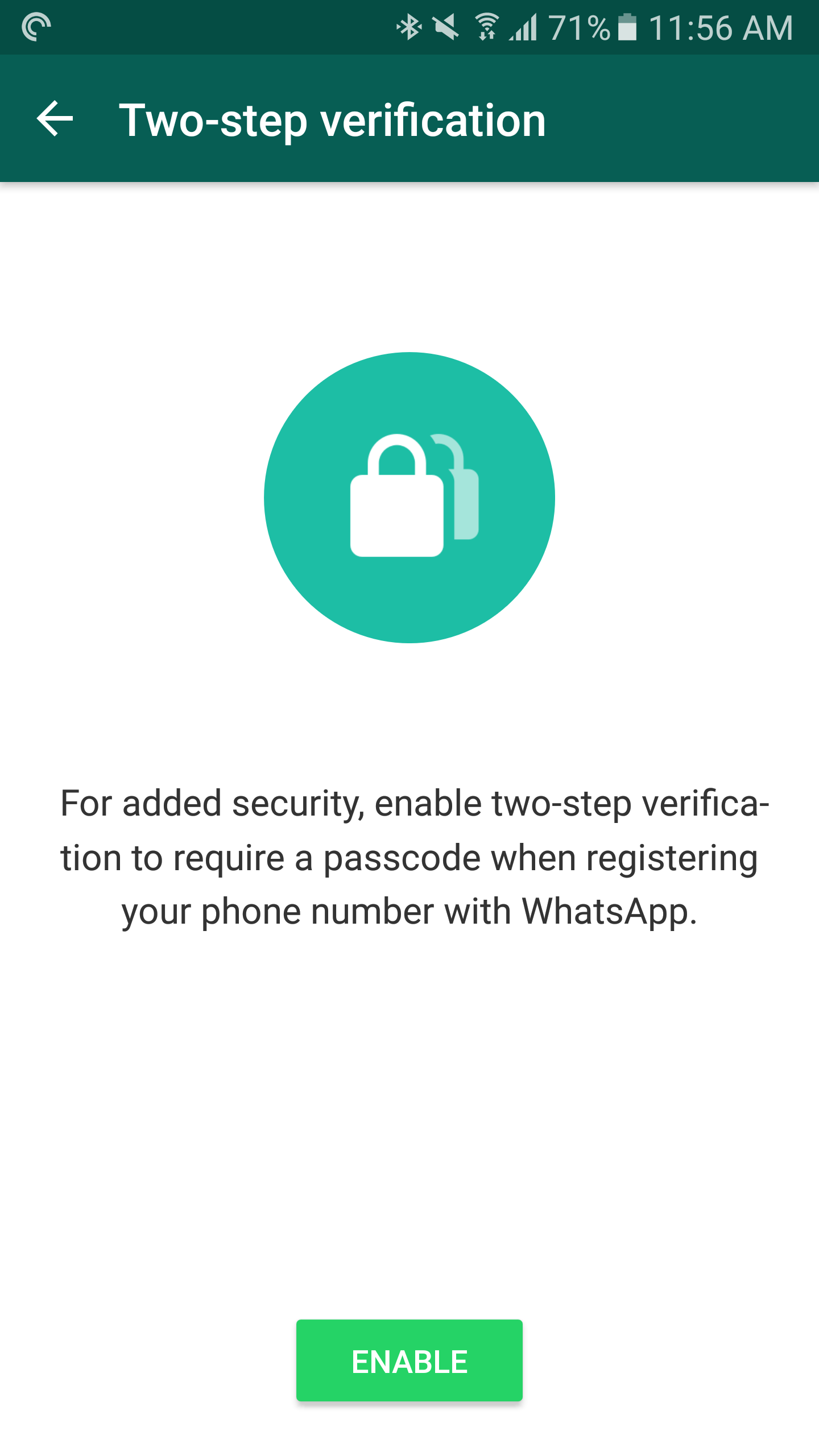
We've known WhatsApp would be enabling 2-factor authentication for many months now, but the functionality has only just gone live in some of the latest beta versions of the app (2.16.341 and above, maybe even earlier).
If you head over to your account settings in WhatsApp, you'll see a new Two-step verification option. Tap it to get to a screen that explains what 2-step verification is and get the option to enable it.
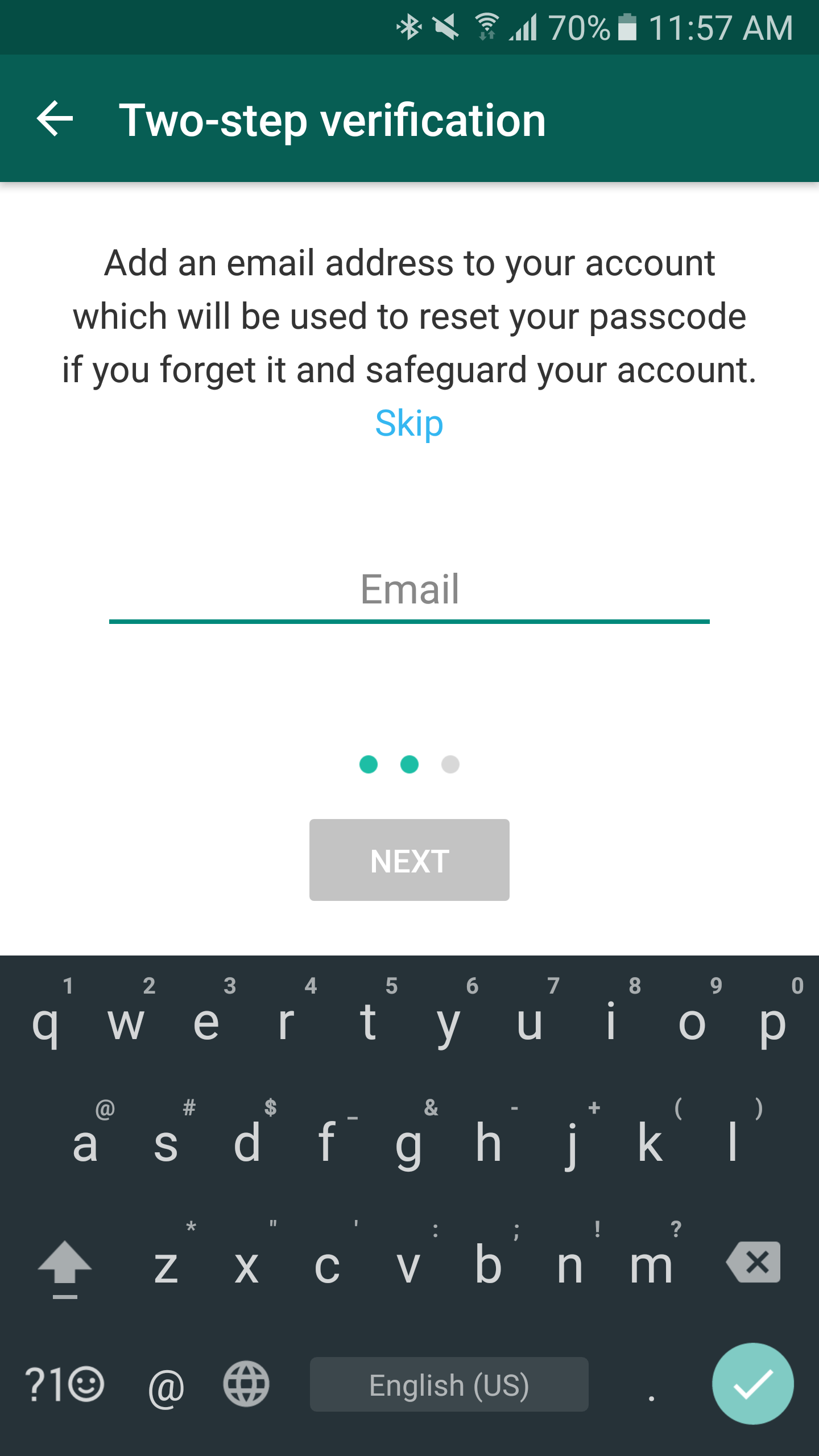
You'll then have to enter a 6-digit passcode that you'll be asked for each time you try to register your phone number with WhatsApp, and confirm it. You'll also need to give an email address that'll be used to reset your passcode should you forget it.
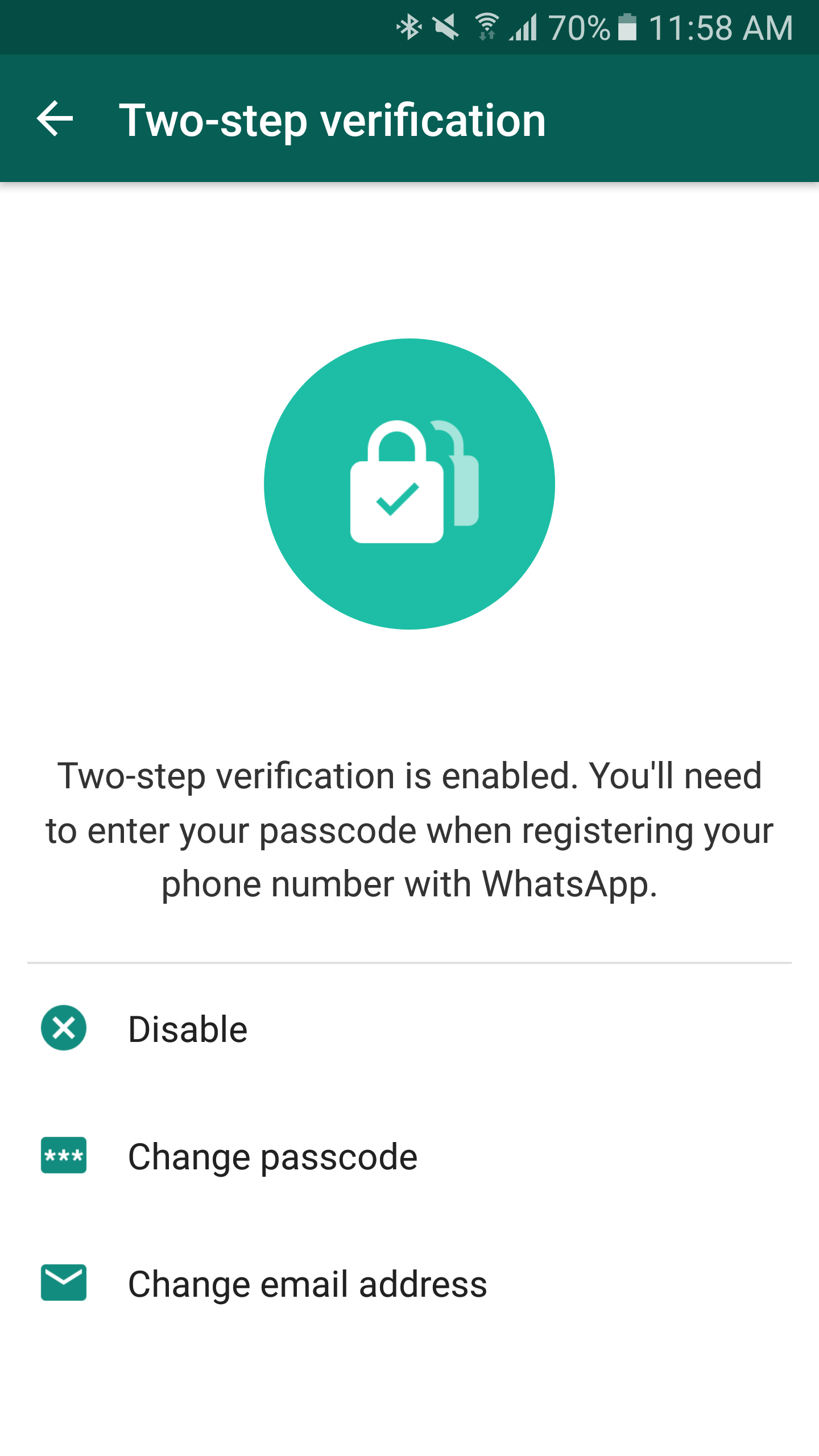
Once that's done, two-step verification will be active on your phone number. No one will be able to activate WhatsApp with the same phone number unless they have the passcode or access to the email account to reset it.
Another welcome improvement to WhatsApp, which was introduced a few beta versions ago too, is the option to play audio messages in the background. Previously, you had to keep WhatsApp open and stay within the conversation to hear any voice message received in it. Now, you can wander away freely, switch to other conversations or even other apps, and as long as the voice message isn't over and your phone's screen doesn't turn off, the audio will continue playing.